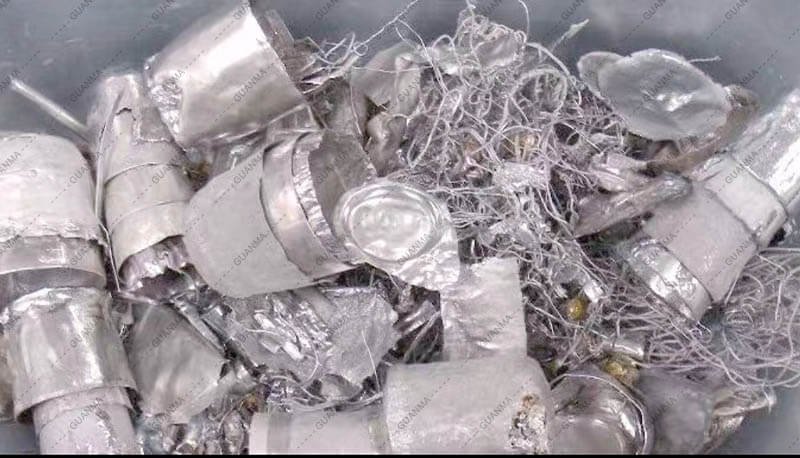
The Secondary Lead Production Process – Step by Step
Crushing and Sorting of Waste Lead-Acid Batteries
The process begins with the mechanical crushing and sorting of collected waste lead-acid batteries. This step separates the lead-containing materials from the other components, producing a concentrated lead fraction ready for further treatment.
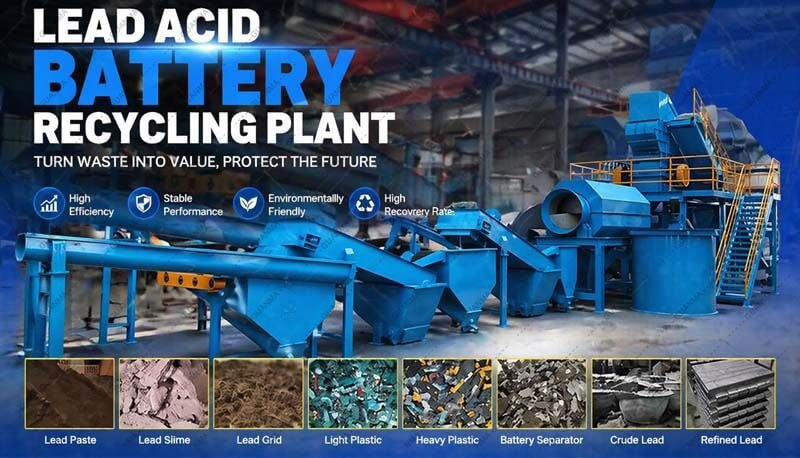
Desulfurization and Alloy Smelting
The sorted lead-containing material first undergoes desulfurization. Once desulfurized, it is charged into an alloy smelting furnace, where it is melted and formulated into lead alloys. At the end of the smelting stage, crude lead is obtained.
Refining and Casting into Lead Ingots
The crude lead then moves through a refining process, which removes impurities to yield refined lead and various alloyed lead products. Finally, the purified metal is cast into lead ingots for commercial use.
Waste and By-Product Management in Secondary Lead Smelting
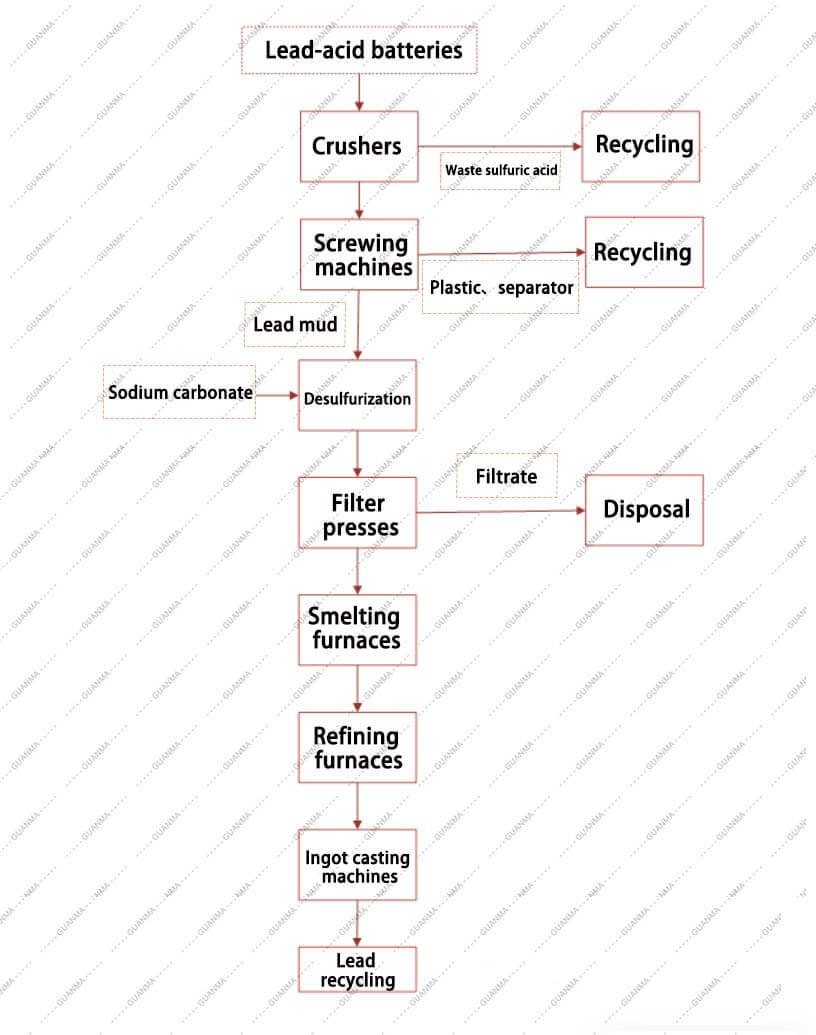
During production, the lead content in smelting furnace slag is controlled to less than 1.5%, and the lead content in waste plastics is maintained below 0.5%. These low-level materials are managed separately to prevent cross-contamination.
Internal Recycling of High-Lead Residues
Certain waste fractions contain significantly higher lead concentrations and cannot be discarded directly. Dust, post-refining slag, and sludge residues from sludge treatment all fall into this category. To recover the valuable lead, these residues are entirely returned to the smelting furnace for re-smelting.
Recovering Antimony Trioxide and Sodium Sulfate
The refining slag is particularly notable for its high antimony content. This allows the extraction of industrial-grade, flame-retardant antimony trioxide, which is sold externally. Additionally, the by-product sodium sulfate generated in the process is recovered and marketed as an industrial raw material, creating an extra revenue stream.
📩 Get Your Free Quote Today
Contact us today to discuss your project, capacity requirements, and target materials. Our team will reply within 24 hours with a customized proposal. You can also reach us directly at guanmamachinery@gmail.com — we are here to help!