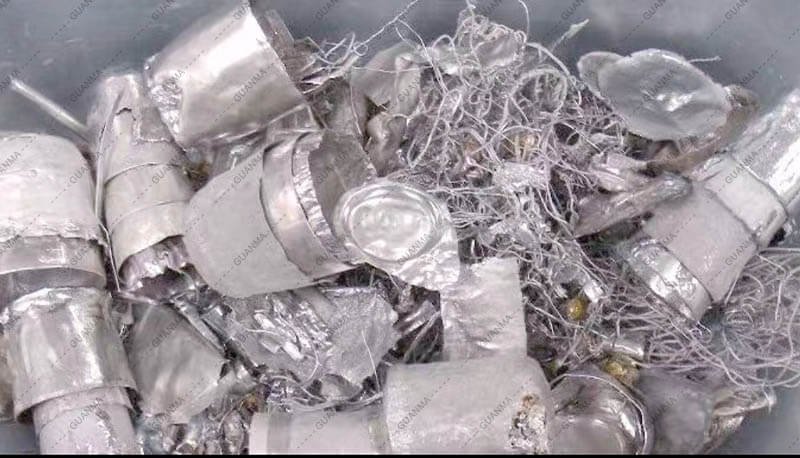
What Is a Black Mass Recycling Hydrometallurgical Plant?
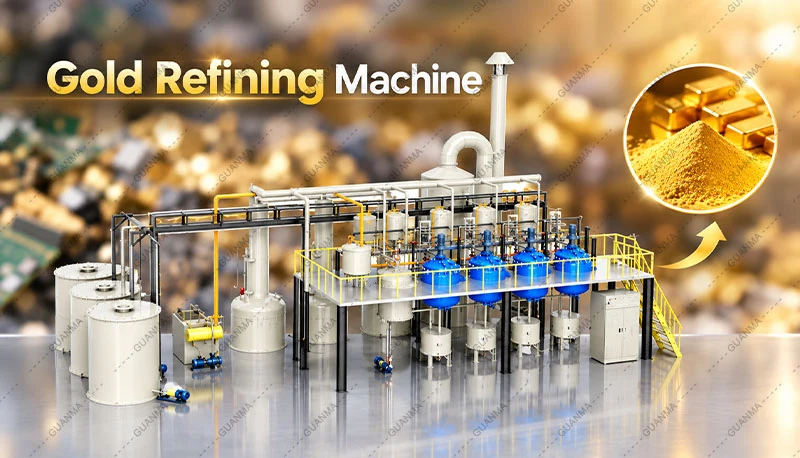
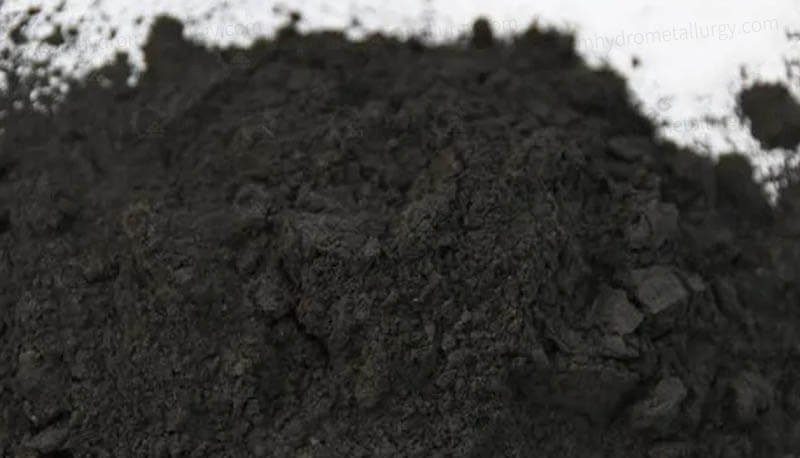
A black mass recycling hydrometallurgical plant is a specialized industrial facility designed to extract valuable metals from shredded end-of-life lithium-ion batteries—the material known as “black mass.” Instead of burning or simply landfilling battery scrap, this type of plant uses carefully controlled chemical (hydrometallurgical) processes to dissolve the metals and then selectively recover lithium, cobalt, nickel, and manganese as high-purity, battery-grade products.
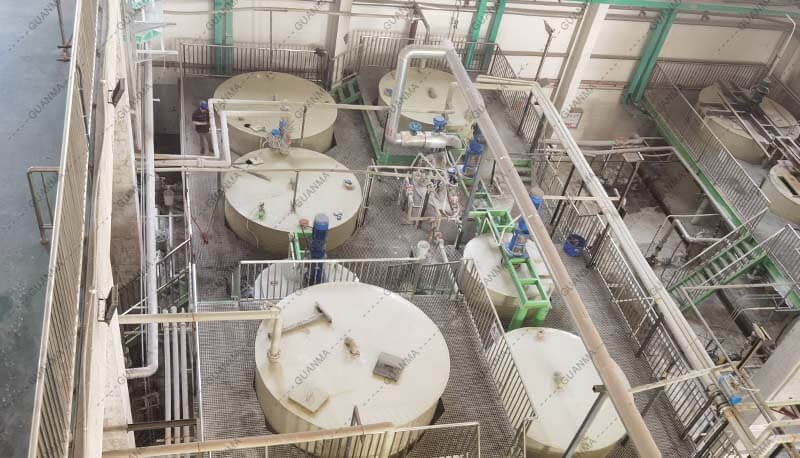
Step-by-Step Hydrometallurgical Process for Black Mass
Below is the standard sequence in a modern black mass recycling hydrometallurgical plant.
Black Mass Pre-Treatment and Impurity Removal
Not all black mass arrives ready to leach. The first stage often involves additional crushing, sieving, and magnetic separation to remove copper and aluminum foil fragments, iron, and plastics.
Acid Leaching – Dissolving Valuable Metals
The core of any hydrometallurgical process for black mass is the leaching circuit. This dissolves the target metals (Li, Co, Ni, Mn) into the liquid phase while leaving graphite and insoluble residues behind. To achieve >95% leaching efficiency for cobalt and nickel.
Solvent Extraction
Solvent extraction (SX) is the industry method for cobalt, nickel, and manganese recovery. A series of mixer-settler stages uses specialized extractants that bind to one metal at a time, allowing you to strip out cobalt sulfate, then nickel sulfate, then manganese sulfate at high purity.
Ion Exchange
Ion exchange resins or selective precipitation often recover lithium or polish the final solutions to remove trace impurities like calcium and magnesium.
Crystallization and Production of Battery-Grade Metal Salts
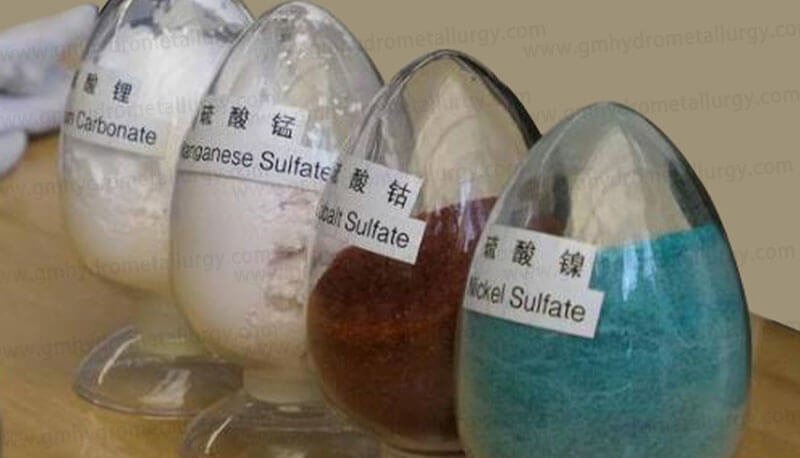
The purified metal sulfate solutions are concentrated in an evaporator-crystallizer system. The resulting crystals—cobalt sulfate, nickel sulfate, manganese sulfate, and lithium carbonate or lithium hydroxide. A well-designed hydrometallurgical plant can consistently produce these salts at battery-grade specifications.
Key Benefits of a Hydrometallurgical Black Mass Recycling Plant
Higher Metal Recovery Rates
Compared to pyrometallurgical (smelting) methods, hydrometallurgy achieves over 95% recovery of lithium, a metal that is largely lost to slag in a furnace. Cobalt and nickel recoveries routinely exceed 98%.
Battery-Grade Product Directly
A dedicated black mass recycling hydrometallurgical plant yields high-value sulfates and lithium salts ready for direct cathode synthesis, maximizing your revenue per ton of black mass processed.
Modular Scalability
You can build a plant for 5,000 tons of black mass per year and later expand it with parallel leaching and SX trains, protecting your initial investment.
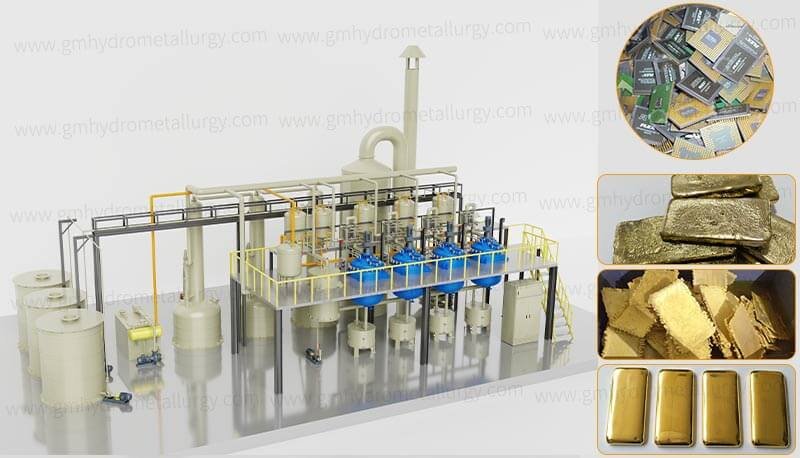
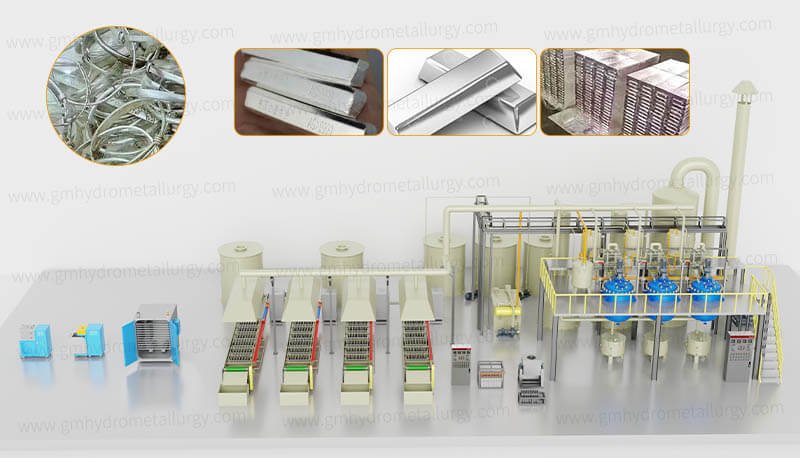
Core Components of a Black Mass Recycling Hydrometallurgical Plant
When budgeting for a black mass processing plant cost, you need to understand the main unit operations and their role.
Leaching Reactors and Solid-Liquid Filtration
Continuous stirred-tank reactors (CSTRs) lined with acid-resistant materials perform the leaching. Filter presses or vacuum belt filters then separate the graphite-rich residue from the metal-bearing solution.
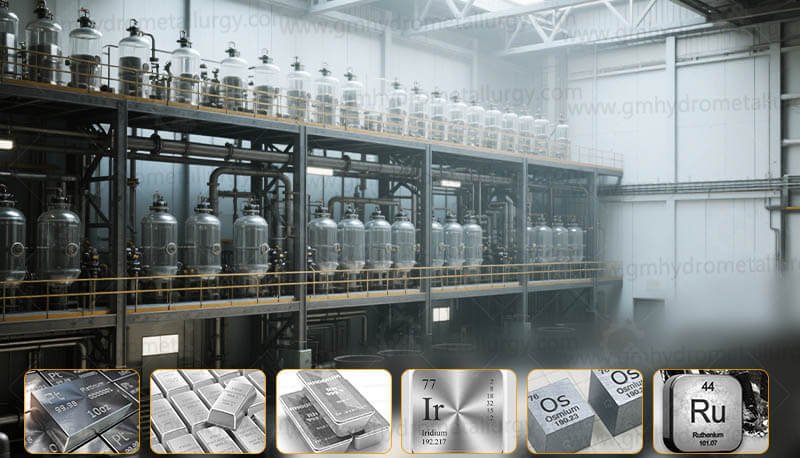
Solvent Extraction Mixer-Settlers and Electrowinning Cells
The SX circuit is the heart of separation. Modular mixer-settler banks with variable-speed impellers give precise control. For final nickel or cobalt recovery, some plants add electrowinning cells to produce metal cathodes.
Crystallizers, Dryers
Forced-circulation crystallizers evaporate water under vacuum, forming uniformly sized crystals. Fluidized bed dryers then remove surface moisture.
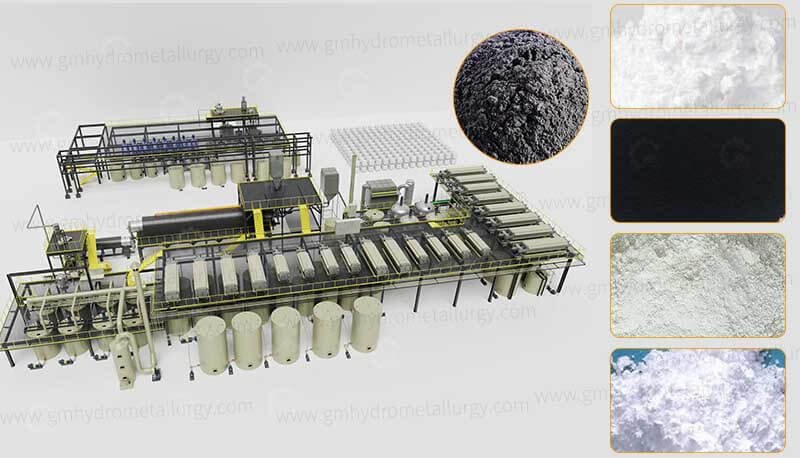
What Influences Black Mass Processing Plant Cost and ROI?
Many customers ask, “What is the black mass processing plant cost and how quickly will it pay back?” Your total capital expenditure (CAPEX) depends on throughput capacity, the complexity of the SX circuit (number of metals separated), and the level of automation.
Operational profitability is driven by the purity premium. Our feasibility models show a typical ROI period of 3–5 years for a mid-scale black mass recycling hydrometallurgical plant, assuming steady feedstock supply and current cathode metal prices.
Our Integrated Black Mass Recycling Hydrometallurgical Plant Services
We don’t just supply equipment—we deliver a complete battery recycling hydrometallurgical solution tailored to your black mass composition and production targets.
Process Design & Laboratory Testing: We start with your black mass sample. Our lab runs full leaching, SX, and crystallization trials to produce a bankable feasibility report.
Turnkey EPC Delivery: Engineering, procurement, and construction of your entire plant—from leaching tanks to the crystallizer building. All piping, electrical, and automation are included.
Environmental Compliance: Our plants integrate closed-loop water circuits recycling to meet the strictest wastewater discharge standards.
Training & After-Sales: Our engineers commission the plant on your site, train your operators, and remain available for remote troubleshooting and maintenance advice. Spare parts and chemical consumable supply.
Turn Black Mass into High-Value Battery Materials Today
Contact guanma machinery for a customized black mass recycling hydrometallurgical plant quotation and a free processing test of your black mass sample.
📩 Get Your Free Quote Today
Contact us today to discuss your project, capacity requirements, and target materials. Our team will reply within 24 hours with a customized proposal. You can also reach us directly at guanmamachinery@gmail.com — we are here to help!