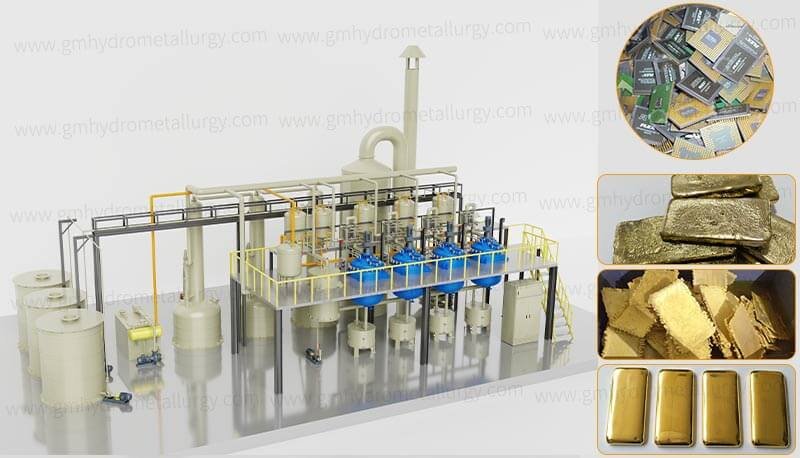
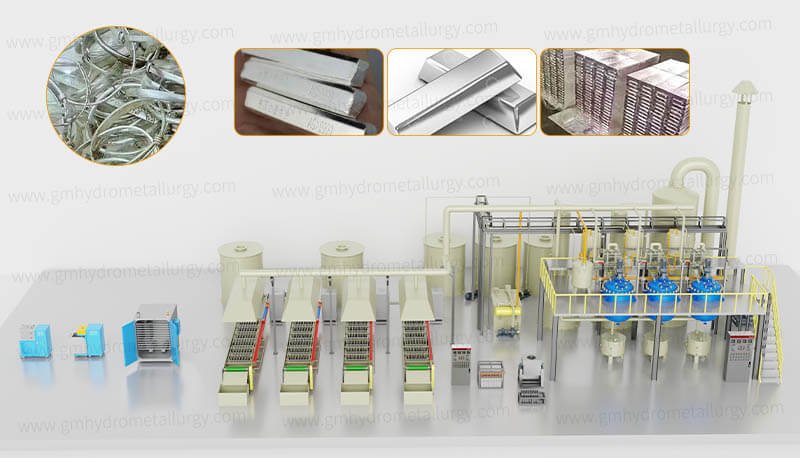
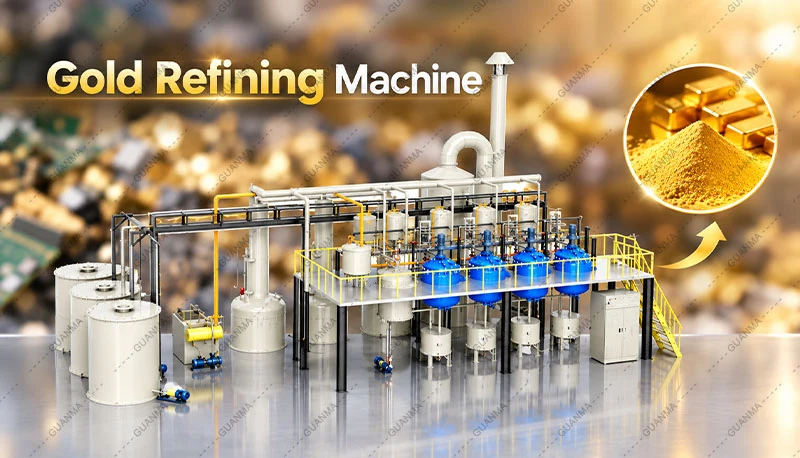
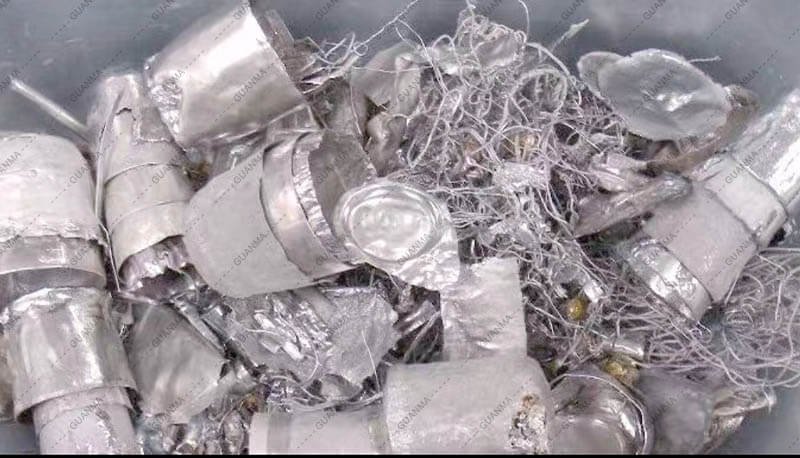
Guanma Machinery deliver precious metals extraction from complex ore solutions tailored precisely to your unique mineralogy—turning stubborn resources into profitable reserves.
What Is a Complex Ore?
A complex ore contains multiple valuable metals mixed with gangue minerals, sulfides, oxides, carbonaceous materials, or refractory compounds that make metal recovery difficult.
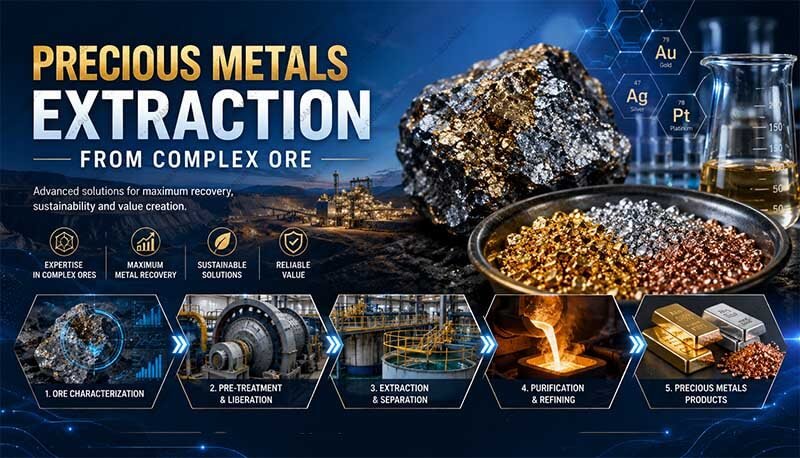
Examples include:
- Gold-bearing sulfide ores
- Platinum group metal (PGM) ores
- Polymetallic ores containing gold, silver, copper, lead, and zinc
- Refractory gold ores
- Arsenic-rich gold concentrates
- Copper-gold complex ores
- Nickel-PGM ores
Unlike free-milling ores, complex ores often require several treatment stages before precious metals can be recovered economically.
Why Is Precious Metals Extraction from Complex Ore Difficult?
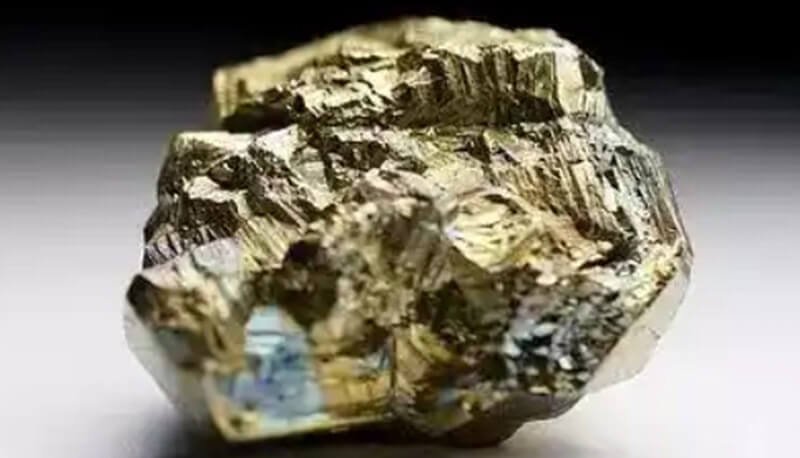
Fine Metal Dissemination
Precious metals are often locked within sulfide minerals, making direct leaching ineffective.
Multiple Valuable Metals
Different metals require different extraction conditions.
High Impurity Content
Arsenic, antimony, tellurium, and carbonaceous materials can interfere with extraction processes.
Environmental Regulations
Modern operations must reduce emissions, tailings contamination, and chemical consumption.
These challenges require advanced beneficiation and metallurgical treatment systems.
Main Methods for Precious Metals Extraction from Complex Ore
1. Mineral Beneficiation and Flotation
Before extraction begins, ores are usually concentrated through crushing, grinding, and flotation.
Process Flow
- Primary crushing
- Secondary crushing
- Ball milling
- Classification
- Froth flotation
- Concentrate dewatering
Flotation is widely used for
- Gold sulfide ore processing
- Silver-bearing ores
- Platinum group metals recovery
- Copper-gold concentrates

2. Hydrometallurgical Extraction
Hydrometallurgy has become one of the fastest-growing technologies for precious metals extraction.
Typical Steps
Leaching
Metal values are dissolved into solution using suitable reagents.
Common leaching agents include
- Cyanide
- Thiourea
- Thiosulfate
- Chloride solutions
- Aqua regia
- Nitric acid systems
- Solution Purification
Impurities are removed through
- Solvent extraction
- Ion exchange
- Selective precipitation
- Metal Recovery
Recovered by
- Electrowinning
- Chemical reduction
- Cementation
3. Cyanidation for Gold and Silver Recovery
Cyanide leaching remains one of the most efficient methods for extracting gold and silver.
Suitable for
- Low-grade gold ore
- Large-scale operations
- Agitated Tank Leaching
Suitable for
Higher-grade concentrates
4. Pressure Oxidation (POX)
Pressure oxidation is often used for refractory gold ores.
How It Works
Ore concentrates are treated under:
- High temperature
- High pressure
- Oxygen-rich conditions
Benefits
- Excellent gold liberation
- High extraction efficiency
- Reduced cyanide consumption
5. Roasting Technology
Roasting converts sulfide minerals into oxides.
Applications
- Refractory gold ore
- Arsenopyrite concentrates
- Sulfide-rich ores
Advantages
- Improves metal liberation
- Increases leaching efficiency
6. Bioleaching Technology
Bioleaching uses microorganisms to oxidize sulfide minerals.
Benefits
- Low operating cost
- Eco-friendly process
- Reduced chemical consumption
Suitable For
- Low-grade ores
- Refractory concentrates
- Remote mining locations
Efficient precious metals extraction from complex ore requires a combination of advanced beneficiation, hydrometallurgical processing, refining technologies, and environmental management practices.
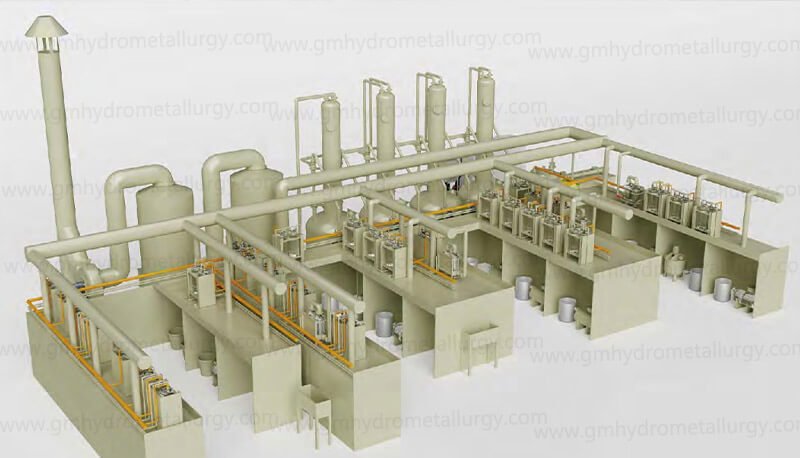
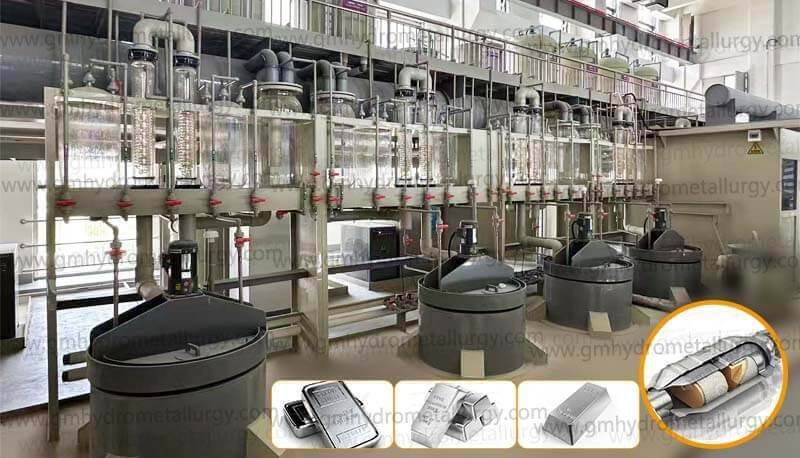
Guanma Machinery precious metals recycling plants integrate flotation, leaching, solvent extraction, electrowinning, and refining systems to recover maximum value from increasingly complex mineral resources.
Frequently Asked Questions (FAQs)
What is the best method for precious metals extraction from complex ore?
The best method depends on ore characteristics. Common solutions include flotation combined with hydrometallurgical leaching, pressure oxidation, or bioleaching.
Can refractory gold ore be processed economically?
Yes. Pretreatment technologies such as pressure oxidation, roasting, and bio-oxidation can increase gold recovery from below 60% to over 90%.
Which precious metals can be recovered from complex ores?
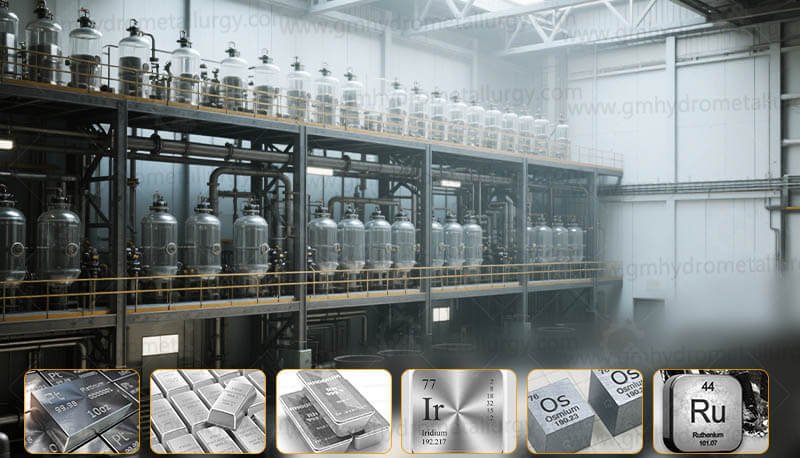
Gold, silver, platinum, palladium, rhodium, iridium, ruthenium, and other valuable metals can be extracted using specialized processes.
What recovery rate can modern extraction plants achieve?
Depending on the ore type, modern facilities often achieve recovery rates between 85% and 98%.
Is hydrometallurgy better than pyrometallurgy?
Hydrometallurgy generally offers lower energy consumption, better selectivity, and improved environmental performance, making it increasingly popular for precious metals recovery.
📩 Get Your Free Quote Today
Contact us today to discuss your project, capacity requirements, and target materials. Our team will reply within 24 hours with a customized proposal. You can also reach us directly at guanmamachinery@gmail.com — we are here to help!