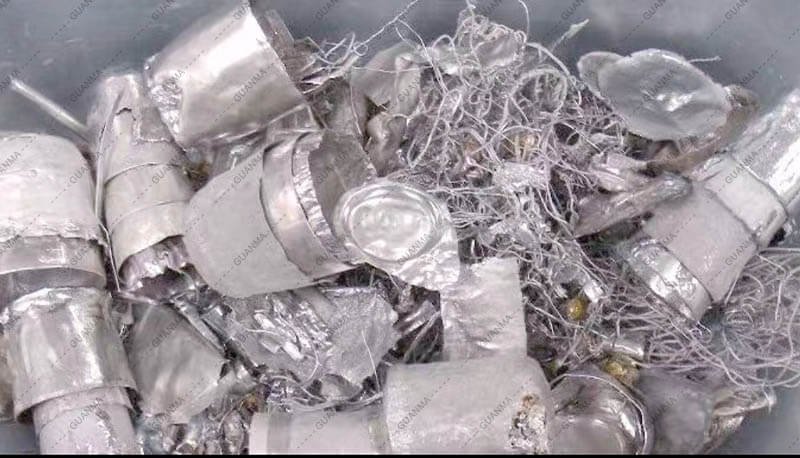
Understanding the rotary furnace work not only helps you optimize production but also makes it easier to choose the right lead recycling plant manufacturer for your project.
What is a rotary furnace?
A rotary furnace is a cylindrical, refractory-lined vessel that rotates around its horizontal axis. In the lead industry, it’s primarily used to recover lead from battery scrap, lead paste, drosses, and other lead-bearing residues.
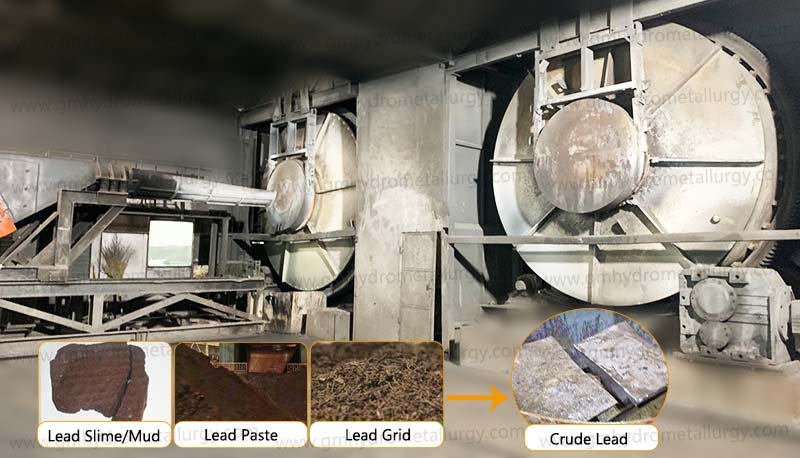
How does a rotary furnace work: step-by-step
Understanding how does a rotary furnace work starts with a clear process flow. Here’s what happens inside a typical rotary furnace for lead smelting:
1. Charging
Raw materials—usually a mix of lead battery scrap, soda ash, iron turnings, and a carbonaceous reductant like coke or charcoal—are loaded into the rotary furnace through a charging door or a dedicated feeding system.
2. Heating and melting
Once the charge is in place, a burner (often fired by oil, gas, or a dual-fuel system) heats the furnace interior to 900–1,200°C. As the furnace rotates at a controlled speed of 0.5–2 rpm, the charge is continuously tumbled, This tumbling action is what makes a rotary furnace exceptionally efficient for heterogeneous feeds like battery scrap.
3. Reduction reaction
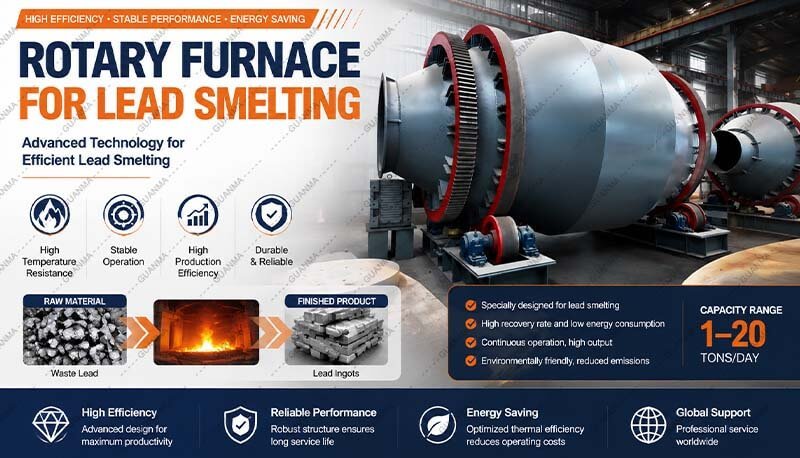
Inside the furnace, the carbon reductant reacts with lead oxides and lead sulfate at high temperature, reducing them to metallic lead. Iron turnings help to desulfurize the lead paste, converting lead sulfate into lead sulfide, which is then further reduced to lead.
4. Slag-metal separation
The rotation not only improves heat transfer but also aids in separating the heavier molten lead from the lighter slag. Lead collects at the bottom of the furnace, while slag floats on top.
5. Tapping
The furnace is designed with two distinct tapholes. When it’s time to pour, the furnace tilts slowly so that molten lead flows out first from the lower taphole into molds, ingot casting machines, or refining kettles. Once the lead is tapped, the slag is poured off separately through the upper taphole for further processing.
6. Off-gas treatment
Rotary furnaces generate dust-laden off-gases and fumes. A well-designed rotary furnace work setup includes a fume hood, a dust collection cyclone, a baghouse filter, and a wet scrubber system to capture particulate matter and neutralize sulfur dioxide. This is especially critical when smelting lead paste that contains sulfates.
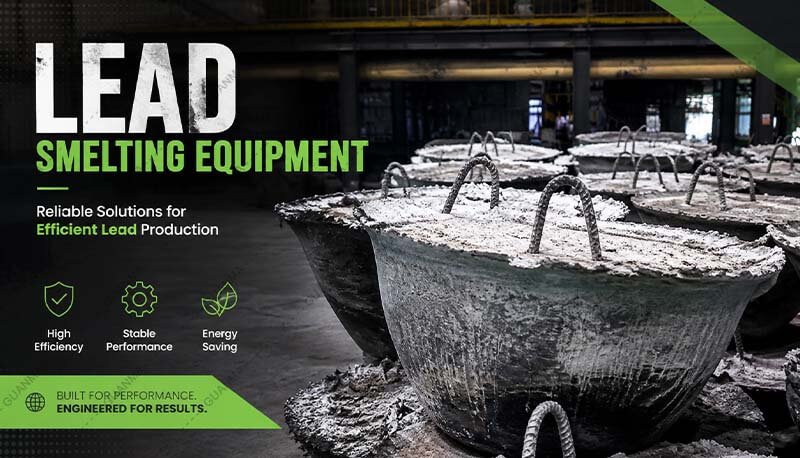
Why a rotary furnace for lead recycling?
The rotary furnace for lead recycling stands out because it can handle a wide variety of feed materials without the need for extensive pre-treatment. Unlike stationary reverbs or blast furnaces, the rotary furnace’s tumbling action delivers:
- High thermal efficiency — the rotating bed exchanges heat rapidly with the refractory wall.
- Excellent mixing — carbon and flux are intimately mixed with the charge, accelerating reduction.
- Flexible batch operation — you can change feed compositions between batches without long downtimes.
- Low labor intensity — modern rotary furnaces feature PLC-controlled rotation, temperature, and tilting.
- High lead recovery — the combination of controlled atmosphere and tumbling maximizes metal yield.
Choosing the right lead recycling plant manufacturer
When you partner with a dedicated lead recycling plant manufacturer, consider the following:
Customization capability
Can they design the furnace capacity (5 to 50 tons per batch or larger) to match your scrap intake?
Turnkey solutions
Do they offer complete systems including feeding equipment, tapping ladles, slag pots, and pollution control units?
Energy efficiency features
Look for regenerative burner systems, oxygen lancing, and heat recovery options that reduce your operating cost per ton of lead produced.
Compliance expertise
A trustworthy manufacturer ensures the plant meets local environmental standards for emissions and workplace safety.
Training and support
On-site commissioning, operator training, and readily available spare parts make a significant difference in long-term uptime.
Start a profitable lead recycling business
If you are looking to install, upgrade, or expand your lead recycling capacity, partner with an experienced lead recycling plant manufacturer that understands every detail of rotary furnace design and operation.
Contact guanma machinery today to discuss your project, request a customized rotary furnace proposal, or learn more about our complete lead recycling solutions.
📩 Get Your Free Quote Today
Contact us today to discuss your project, capacity requirements, and target materials. Our team will reply within 24 hours with a customized proposal. You can also reach us directly at guanmamachinery@gmail.com — we are here to help!